
01
Capture
The helmet-mounted module films the work zone and the torch position during the pass, without changing the workstation or the process.

ARCHITECTURE
A mixed-reality module mounted on the helmet, a computer-vision pipeline and feedback displayed in the welder's field of view.
TECHNICAL CHAIN
The full chain, from the welding scene to the recorded gesture. Each link is described as currently designed: some are validated in a virtual environment, others still have to be proven in real conditions.
01
The helmet-mounted module films the work zone and the torch position during the pass, without changing the workstation or the process.
02
Luminance range correction, image stabilisation and filtering of the noise caused by fumes and spatter, before any analysis.
03
Detection of the torch, the workpiece and the weld pool, then reconstruction of the trajectory in the workpiece frame of reference.
04
Computation of gesture parameters — travel speed, arc height, angles, regularity — and comparison with the ranges expected for the procedure.
05
Visual feedback displayed in the field of view during the pass, kept minimal so it never pulls attention away from the pool.
06
Session recording, per-learner history and a workshop-level view for the instructor.
How these steps are split between on-board and off-board computing is still an open design decision.
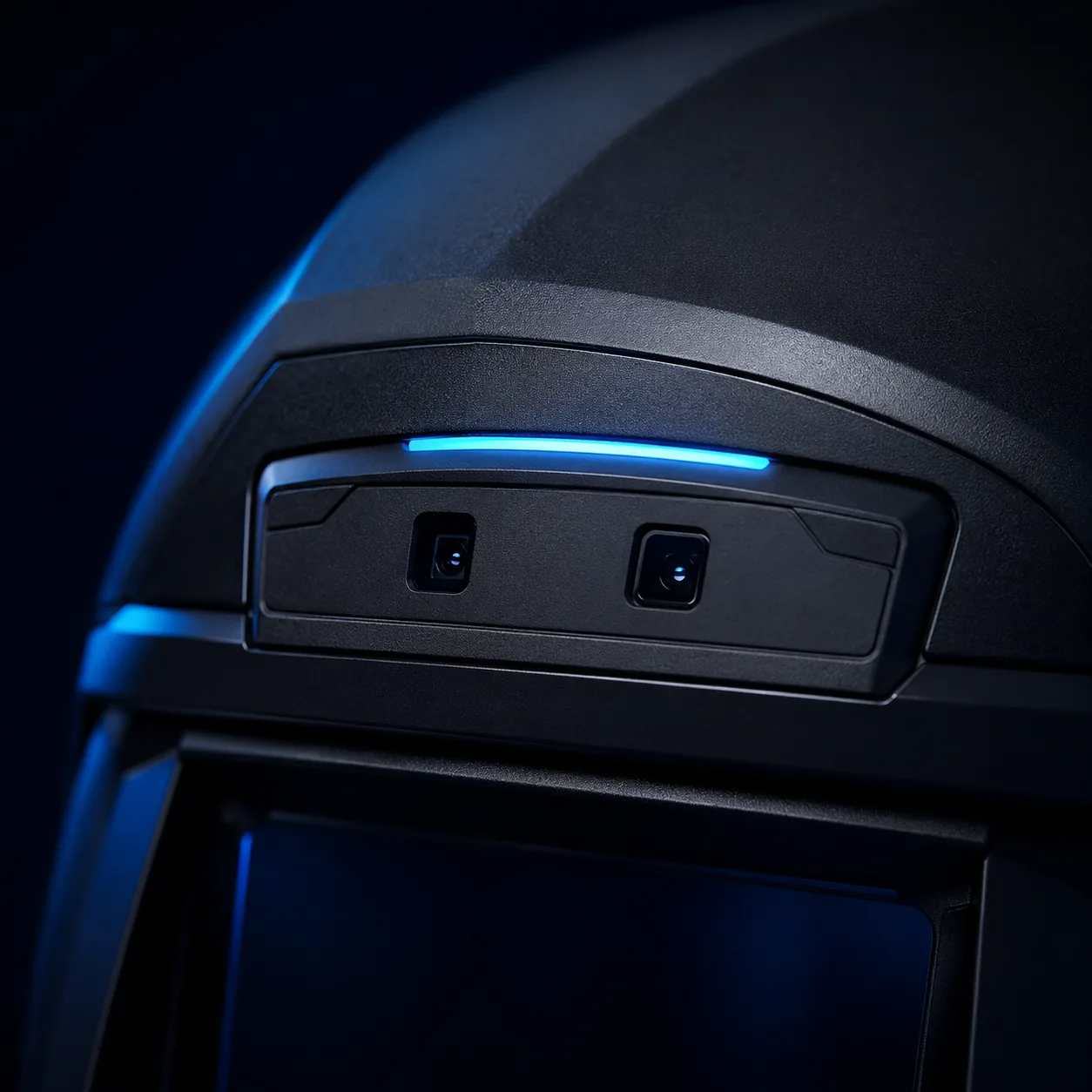
The module mounts on the welder's helmet without changing the station or the torch.
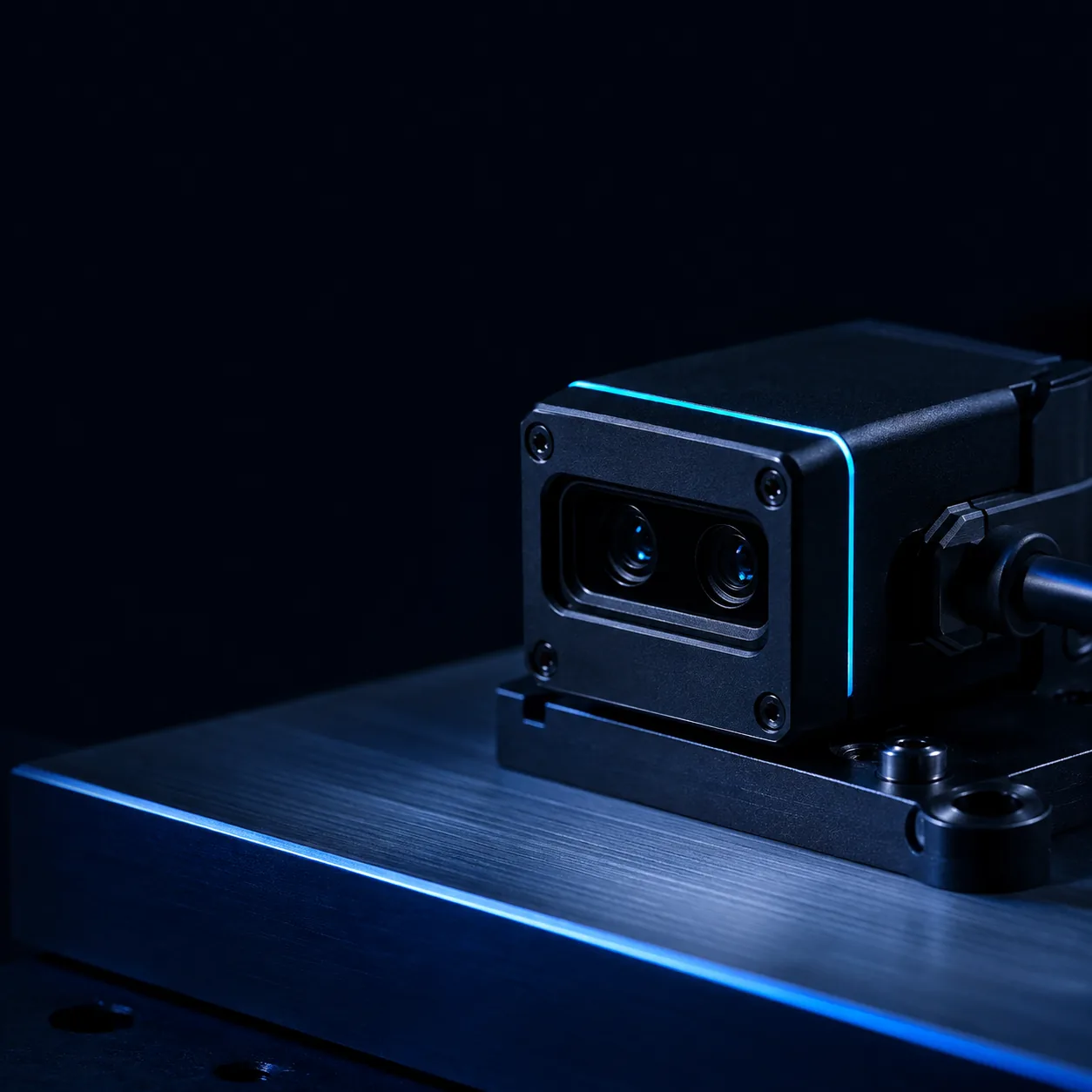
Cameras capture the weld zone and its immediate surroundings, despite the arc's extreme light dynamics.
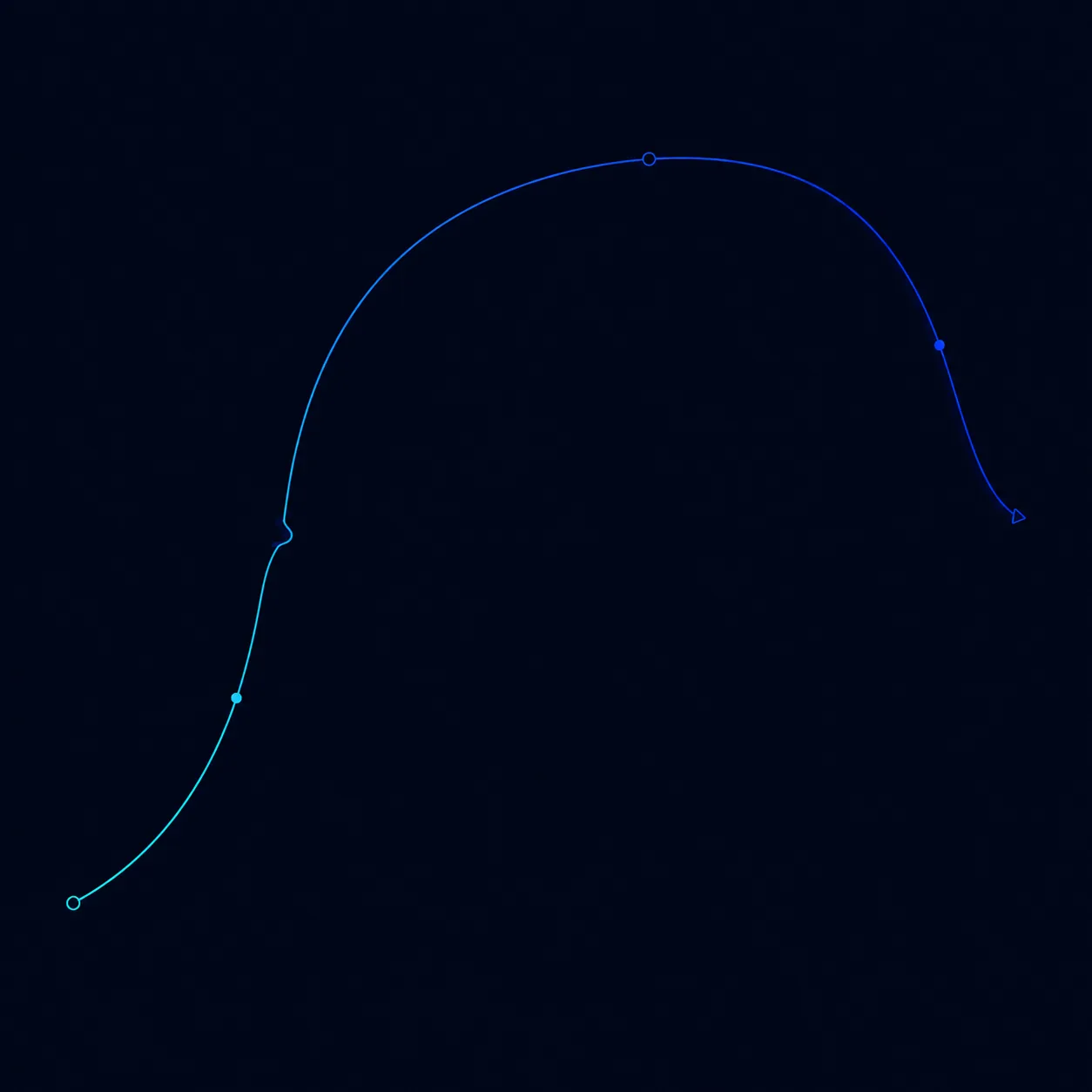
Algorithms reconstruct the torch trajectory and compare the performed gesture with the expected one.
DATA AND COMPLIANCE
These principles describe our design intent. They are not a contractual commitment: exact terms will be formalised with each partner organisation.
COLLABORATION
Training centres and workshops willing to host supervised trials in real conditions.